Evaluating Mechanical Condition in Early Sewing Machines
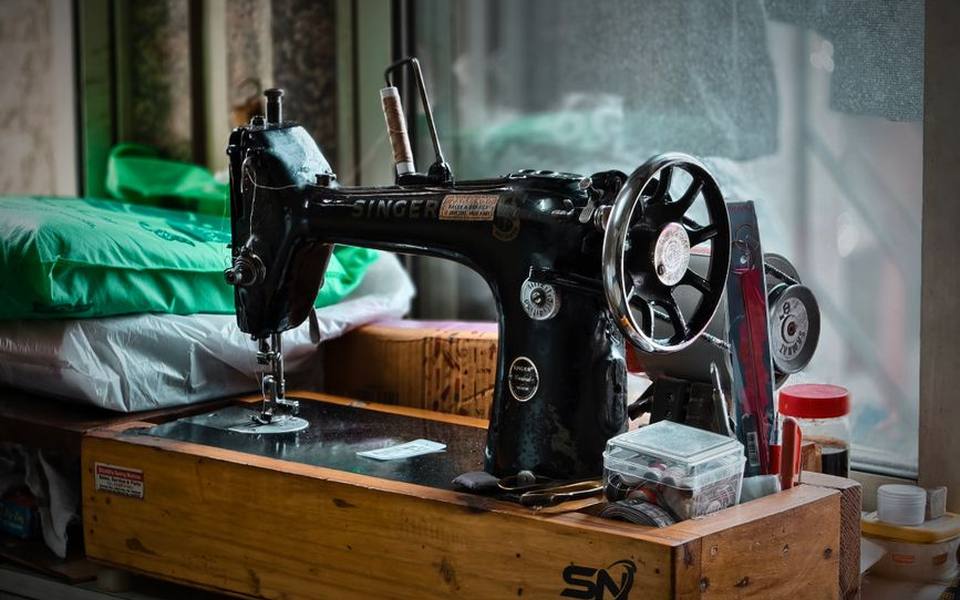
Finding an old vintage sewing machine in the wild often feels like uncovering a time capsule, but mechanical soundness matters far more than surface charm. Before committing to a purchase, your first physical check should always be the handwheel. Turn it toward you gently to feel whether the internal drive gears rotate smoothly or bind up. A machine that turns freely, even with slight resistance from petrified oil, is generally a prime candidate for a straightforward restoration, whereas seized internal assemblies can require specialized heat treatments and hours of delicate solvent soaking.
Take a close look beneath the slide plate to examine the bobbin area and the shuttle mechanism. Early machines typically utilize either an oscillating round bobbin or a vibrating long shuttle shaped like a torpedo bullet. Inspect the feed dogs to see if the metal teeth are sharp and clear of accumulated lint, and check the needle bar for any visible wobble or pitting. Surface rust on the exterior japanned body is largely cosmetic, but deep corrosion on precision friction surfaces will inevitably ruin stitch formation and shred modern thread.
Examine the presser foot assembly and the tension disks situated on the faceplate or side casting. Tension units on vintage machines rely on small coil springs and polished metal discs that regulate thread pull; if these discs are missing, pitted, or bent, you will struggle to achieve balanced tension. Replacement parts for common models remain relatively accessible, but odd or obscure patents often require hunting down donor chassis. Checking these core mechanical points prevents you from paying working prices for what amounts to a purely decorative parlor piece.
The Enduring Appeal of Singer Manufacturing Company Models
No single maker dominated the domestic textile landscape quite like the Singer Manufacturing Company, whose machines were engineered to survive continuous daily household use for generations. Enthusiasts actively seek out specific domestic models such as the Model 27 and 127 with their vibrating shuttles, the venerable Model 66 with its horizontal drop-in bobbin, and the legendary Model 201, revered for its whisper-quiet helical gear drive. Each of these machines bears testament to an era when domestic appliances were built of hand-fitted cast iron and hardened steel rather than stamped sheet metal.
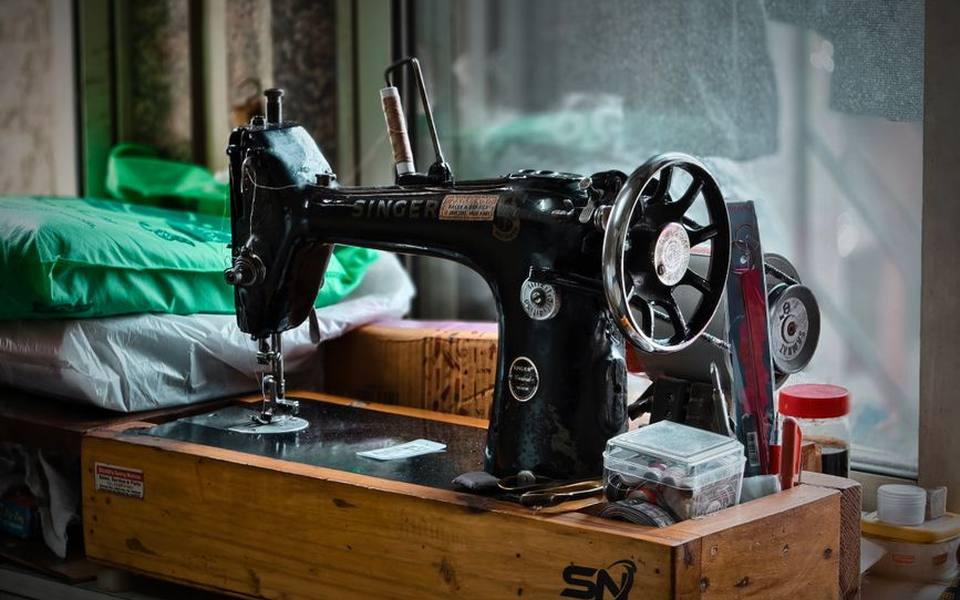
Serial numbers provide the key to dating Singer equipment with remarkable precision, as company logbooks preserved detailed allotment records starting in the late nineteenth century. A brass medallion riveted to the right front bed plate or a stamped alphanumeric code near the base will reveal the exact production year and factory location, from Elizabethport, New Jersey, to Kilbowie, Scotland. Understanding these dates helps distinguish common late-production models from rare early runs featuring hand-applied floral, red-eye, or Egyptian sphinx decal designs that command heightened collector interest.
When browsing dealer booths in regional antique malls, you will notice that Singer values fluctuate significantly based on decal preservation and original equipment. A Singer 221 or 222 Featherweight, manufactured from the 1930s through the 1960s as a lightweight aluminum portable, routinely fetches several hundred dollars depending on case condition and included accessories. Conversely, heavy full-sized cast-iron treadle heads produced in the millions during the 1910s and 1920s remain widely affordable entry points for beginning collectors.
Industrial Workhorses and the Classic Tailor Machine
While domestic units handled household mending, commercial workrooms relied on the rugged old tailor machine, designed specifically for sustained high-speed production and heavier textiles. Makers like Singer, Wheeler & Wilson, and Wilcox & Gibbs built dedicated industrial and semi-industrial variants featuring elongated harp spaces, oversized needle bars, and powerful direct-drive mechanisms. A vintage tailor's machine was engineered to punch through layered wool, stiffened canvas, heavy denim, and harness leather without skipping a single stitch or throwing timing out of alignment.
Recognizing an authentic tailor setup requires examining the bed size, weight, and lubrication systems. These commercial units typically weigh upwards of forty to sixty pounds for the bare cast-iron head alone, often featuring exposed oiling wicks, knee-lever presser foot lifters, and oversized balance wheels meant to transfer high torque from a floor-mounted clutch motor or heavy industrial treadle. The clearances around the throat plate are noticeably broader than on domestic parlor machines, accommodating bulky overcoats, structured suits, and military garments with ease.
If you plan to use an old artisan tailor machine for contemporary projects like leatherwork or heavy upholstery, assess the availability of compatible industrial needle systems. Commercial units rarely accept standard domestic flat-shank needles, instead requiring round-shank industrial needles that come in specialized lengths and point styles. Confirming that the needle clamp has not been re-tapped or stripped by past operators ensures that the machine will hold timing under the substantial tension demands of bonded nylon or heavy linen thread.
Evaluating Vintage Sewing Machine Tables and Cabinetry
A complete setup often includes its original vintage sewing machine tables, which represent exceptional examples of late-nineteenth and early-twentieth-century utilitarian cabinetry. Manufacturers paired their iron mechanical heads with quartersawn white oak, rich walnut, or fiddleback mahogany parlor cabinets fitted with multiple tiers of curved side drawers. The woodwork was not merely an aesthetic container; it formed an integrated workspace equipped with embossed measuring rules along the edge, drop-leaf extensions, and specialized swing-out trays engineered to organize wooden thread spools.
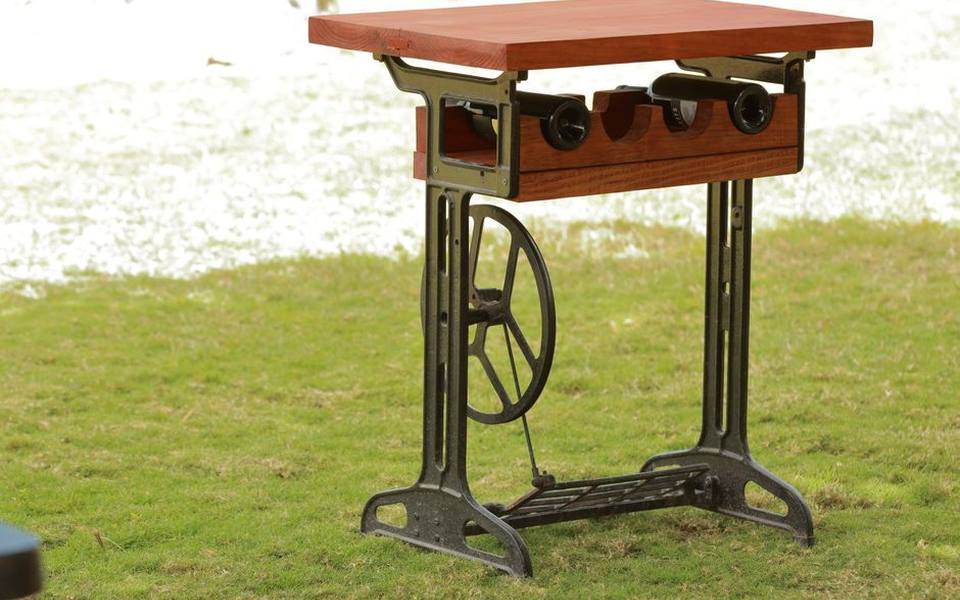
When inspecting vintage sewing machine tables, scrutinize the mechanical linkages and cast-iron treadle bases beneath the woodwork. The foot pedal should swing smoothly on its center pivot pins without grinding, transferring motion upward through a wooden pitman rod to the large spoked flywheel. Look closely at the iron casting for structural cracks or old braze repairs, particularly around the pedal hinges and cross-braces where stress fractures occasionally developed after decades of vigorous family use or rough household moves.
Cabinets that have spent decades in unheated basements or humid barns frequently exhibit lifting veneer, water stains, and delaminated glue joints around the fold-over leaf. Before purchasing, check whether the interior cradle hinges operate properly and ensure the machine head drops smoothly into the storage cavity without binding. Finding well-preserved cabinetry at specialized antique furniture stores can provide a gorgeous period showpiece, whether you keep the mechanical assembly intact or repurpose the ornate cast-iron legs.
Identifying Antique Spinning Wheels and Flax Wheels
Long before mechanized sewing arrived, rural households relied on the hand-powered vintage spinning wheel to convert raw wool, linen, and cotton into usable yarn. Collectors and fiber artists broadly categorize these tools into two distinct configurations: the compact upright or vertical wheel, and the horizontal low-wheel setup. Understanding the functional anatomy of the wheel—including the flyer assembly, the bobbin, the maiden uprights, and the mother-of-all crossbar—allows you to distinguish between an authentic historical tool and a non-functional decorative replica.
The antique flax wheel, often referred to as a Saxony wheel, features a tilted horizontal bench, three turned legs, and a drive wheel positioned opposite the flyer assembly. These slender, elegant instruments were engineered primarily for processing long linen fibers, which required high rotational speed and steady lubrication from a small attached water cup. Flax wheels often display delicate lathe turnings, bone or horn bushings, and specialized distaff poles designed to hold dressed flax fibers ready for drafting.
By contrast, great wheels or walking wheels lack treadles entirely, utilizing a massive wooden drive wheel measuring forty inches or more in diameter that the spinner turned by hand while stepping backward along the room. These large spindle wheels were optimized for spinning short-staple wool cardings using intermittent drafting. If you encounter an antique spinning wheel, examine whether the wheel rim remains true and flat; warped wheel rims will continuously throw the linen drive band off track, rendering the instrument unplayable without skilled wheelwright repair.
Deconstructing the Antique Sewing Wheel Confusion
In casual antique marketplace conversations, buyers frequently use the phrase antique sewing wheel when describing a range of distinct domestic fiber tools. Some novice shoppers use the phrase to describe an early compact spinning apparatus, while others are actually searching for an early treadle wheel base from a sewing machine cabinet. Clarifying the terminology is essential for communicating effectively with dealers, appraising estate items accurately, and locating appropriate replacement components for your personal collection.
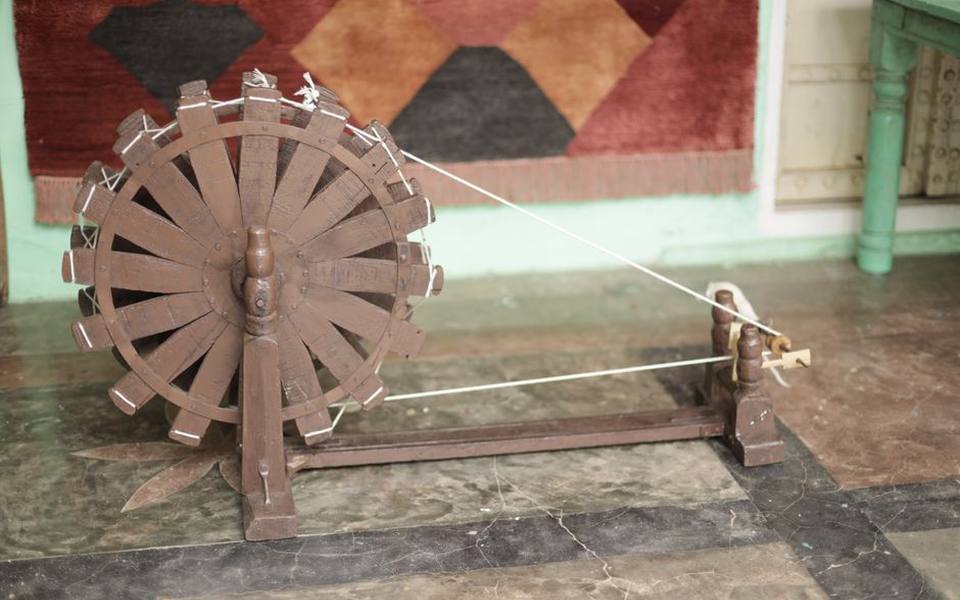
Historically, spinning wheels convert fiber into continuous spun thread or roving yarn, whereas sewing machines incorporate balance wheels to cycle a needle mechanism through pre-spun cloth. Occasionally, the term is applied to antique pattern tracing wheels—small handheld wooden or brass tools equipped with toothed serrated discs used by dressmakers to transfer chalk markings from paper onto wool or silk. Determining which functional tool is actually being offered prevents costly misunderstandings during remote estate purchases or online bids.
When exploring curated booths at antique consignment shops, ask the staff to confirm whether an item labeled as a sewing wheel is complete with its drive tensioning screw and flyer. If the object features a foot pedal connected to a heavy cast-iron balance wheel and leather belt, it belongs to the sewing machine family; if it features a turned wooden frame holding a flyer and bobbin array, you are looking at an authentic spinning wheel.
Dating, Provenance, and Assessing Real Market Value
Determining the monetary value of textile antiques requires balancing historical rarity against mechanical utility and cosmetic preservation. Early patent machines from the 1850s to the 1870s—such as those produced by Grover & Baker, Howe, or early Wheeler & Wilson—routinely command premium figures because so few have survived intact with their original brass tags and accessories. For later mass-produced treadle machines, values depend heavily on clean original paint, intact gilded decals, complete puzzle-box attachment sets, and functioning woodwork.
For spinning wheels, maker marks provide critical provenance, though many early American wheels were built by uncredited local woodturners and chairmakers. Look closely at the end grain of the wooden bench or table for stamped initials, numbers, or maker cartouches impressed with steel letter punches. Signed wheels from noted New England or Pennsylvania craftsmen, as well as European regional imports with distinct chip-carved folk motifs, carry stronger market demand among fiber historians and museum curators than unsigned utilitarian examples.
When high-stakes estate dispersal or insurance documentation is involved, scheduling professional appraisal services guarantees that rare mechanical patents or museum-grade historical wheels receive accurate evaluations. Local estate inventory appraisers familiar with nineteenth-century decorative arts can cross-reference auction records, identifying obscure patent variants or hand-wrought iron components that casual buyers might easily overlook during informal inspections.
Collecting and Using Historic Vintage Sewing Patterns
A fascinating companion to antique machinery is the world of vintage sewing patterns, which trace the evolution of domestic fashion and paper-drafting technology. From the mid-nineteenth century onward, companies like Butterick, McCall's, Simplicity, and Vogue transformed dressmaking by offering mass-produced paper templates to home seamstresses. Early patterns were unprinted, consisting of plain tissue paper pieces identified solely by stamped perforations, notched margins, and small round holes indicating darts, grainlines, and hem allowances.
Preserving antique paper patterns requires careful climate control and thoughtful handling, as aged wood-pulp tissue becomes exceptionally brittle over time. Always verify that an opened envelope contains every original piece by consulting the printed pattern piece guide on the back or instruction sheet. Missing facings, cuffs, or collar pieces can drastically reduce the utility of a collectible pattern, forcing the modern dressmaker to draft replacements from scratch using historical grading principles.
Enthusiasts who sew on vintage machines often prefer using era-appropriate patterns, as historical garments were engineered with seam allowances and ease factors suited to narrower fabric widths and non-stretch natural textiles. When you discover vintage envelopes at estate clearances, keep them housed in acid-free archival sleeves away from direct sunlight. These fragile paper artifacts provide invaluable cultural context, illustrating how everyday sewists utilized their household machines to recreate high-fashion silhouettes in linen, wool, and cotton.
Restoration, Oiling, and Mechanical Maintenance
Restoring an antique mechanical sewing device begins with safe cleaning methods that do not strip original finishes. Never apply harsh automotive solvents, degreasers, or water-based detergents to vintage japanned surfaces, as these chemicals can instantly dissolve delicate gold leaf decals and cloud aged shellac clearcoats. Instead, use pure refined sewing machine mineral oil applied with soft microfiber cloths, allowing the oil to gently break down decades of hardened varnish and accumulated dust over several gentle wipe-downs.
Internal metal mechanisms require targeted lubrication at every designated oil hole and metal-on-metal friction point. Modern general-purpose penetrating sprays should strictly be avoided because they dry into a sticky gum; rely exclusively on lightweight, non-gumming sewing machine oil. For spinning wheels, lubricate wooden axle bearings and leather flyer bearings with light oil, beeswax, or lanolin to reduce friction and eliminate annoying squeaks without soaking deep into the porous wooden fibers.
Treadle drive systems require basic tension upkeep to transfer power reliably from the foot treadle to the balance wheel. Replace stiff or broken leather drive belts with fresh quarter-inch round leather belting, threading the strap through the cabinet openings and securing the ends with a sturdy wire staple. Ensuring proper belt tension prevents slippage when starting thick seams and preserves the rhythmic, effortless cadence that makes operating mechanical treadle equipment such an enduring pleasure.
Finding Authentic Machines at Estate Sales and Shops
Locating well-preserved textile machinery requires patience, keen observation, and frequent visits to varied antique venues. Shopping at local estate sales frequently offers the best opportunity to acquire complete machines directly from their original family homes, often accompanied by original instruction manuals, attachment tins, and hand-stitched sampler cloths. Because these items have often sat undisturbed in upstairs bedrooms or sewing parlors for decades, they generally show far less handling wear than roadside finds.
When exploring multi-dealer venues, don't hesitate to inspect the darker corners and lower shelves where heavy iron machine heads are often stored out of the way. Take a small utility flashlight and a clean rag so you can inspect underneath dirty machine castings and check serial numbers on the spot. Sellers are often open to reasonable discussions on price, particularly if a machine lacks its bobbin case, shuttle, or power cord, giving you room to budget for replacement hardware.
Whether your goal is to assemble an authentic mid-century wardrobe, spin heritage fleeces on a flax wheel, or simply display a stunning piece of American industrial design, antique fiber tools offer unmatched durability. Unlike modern electronic devices designed for planned obsolescence, nineteenth- and twentieth-century mechanical machines were built to be serviced, repaired, and passed down. With basic care and regular lubrication, these storied tools will continue stitching and spinning for another century to come.
Published 2026-09-21 · reviewed with each rebuild, last September 2026.
Find antique stores near you
The directory lists 25,996 antique stores by state and city — pick your state or use the “Near me” button in the header.
More guides
-
 Owning
Cleaning and Polishing Antique Silver Without Damaging the Patina
-
 Money
MoneyNavigating the Market for Vintage Currency
-
 Owning
Evaluating, Using, and Displaying Mid-Century Glassware and Kitchen Antiques
-
 Buying
Navigating Vintage and Antique Jewelry Styles
-
 Owning
How to Clean and Care for Silverware Without Causing Damage
-
 Owning
Vintage Pyrex Value and Safety Guide: Understanding Collector Patterns and Usage
-
 Buying
A Guide to Sourcing Vintage and Estate Jewelry
-
 Money
MoneyValuable Baseball Cards Guide: Spotting Vintage Sports Collectibles
-
 Owning
How to Clean and Restore Antique Wood Furniture
-
 Money
MoneyHow to Find and Use Antique Price Guides Online
-
 Money
MoneyHow to Determine the Value of Old Books and First Editions
-
 Money
MoneyWhere and How to Sell Vintage Coins for the Best Return
-
 Buying
Choosing and Caring for Vintage and Modern Cast Iron Cookware
-
 Owning
How to Polish and Value Antique Silverware at Home
-
 Owning
How to Clean and Polish Antique Wood Furniture Without Damaging It
-
 Buying
Vintage and Classic Cast Iron Cookware: Buyer's, Value, and Care Guide
-
 Buying
Antique Silverware, Vintage Jewelry, and Collectible Coins Guide
-
 Money
MoneyA Practical Guide to Antique Price Guides and Rare Book Valuations
-
 Owning
How to Clean, Polish, and Refinish Antique Wood Furniture
-
 Owning
Ultimate Guide to Vintage and Antique Cast Iron Cookware: Brands, Seasoning, and Care
-
 Owning
How to Clean, Polish, and Value Vintage Silverware and Antique Jewelry
-
 Buying
Valuing Vintage Collectibles: From Rare Dolls and Slot Machines to Classic Lamps and Churns
-
 Owning
How to Clean, Polish, and Refinish Antique Wood Furniture
-
 Money
MoneyVintage Glassware Value Guide: Pyrex, Depression Glass, CorningWare, and Bottles
-
 Money
MoneyAntique & Vintage Price Guides: How to Value Antiques and Collectibles
-
 Buying
How to Value Old Books and First Editions: A Collector's Price Guide
-
 Money
MoneyWhere and How to Sell Vintage Records and Audio Equipment
-
 Buying
How to Buy, Value, and Sell Vintage Coins: A Practical Beginner's Guide
-
 Buying
Estate Sale Guide: How to Find, Buy, and Liquidate Antiques
-
 Buying
Vintage and Modern Cast Iron Cookware: Identification, Seasoning, Buying, and Care
-
 Money
MoneyComprehensive Guide to Antique Values, Old Books, and Collectibles Pricing
-
 Owning
Cleaning and Caring for Vintage Silverware, Fine Jewelry, and Antique Metals
-
 Owning
How to Clean, Polish, and Refinish Antique Wood Furniture
-
 Buying
Vintage and Modern Cast Iron Cookware: Identification, Caring, and Buying Guide
-
 Owning
Antique Silverware: Cleaning, Polishing at Home, and Value Guide
-
 Owning
Care, Polishing, and Refinishing Guide for Antique Wood Furniture
-
 Buying
Vintage Pyrex, Glassware, and Depression Glass Identification and Value Guide
-
 Money
MoneyAntique Price Guides: How to Value and Sell Antiques Online and Offline
-
 Money
MoneyCollectible Old Books and First Editions: Valuation and Identification Guide
-
 Buying
Vintage Sewing Machines, Stoves, and Antique Tools Value Guide
-
 Buying
Collector Guide to Vintage Door Hardware, Knobs, and Cabinet Pulls
-
 Owning
Antique & Vintage Dolls: Values, Identification, and Care
-
 Buying
Antique Hoosier Cupboards and Vintage Desks: History, Identification, and Value
-
 Service
Grandfather, Wall, and Pocket Clock Repair and Identification Guide
-
 Owning
Antique Rotary Telephones and Landlines: Buying, Restoring, and Converting
-
 Owning
Collecting Vintage Picture Frames and Oil Paintings: Framing and Restoration
-
 Buying
Antique Wood Stoves and Log Burners: Buying, Safety, and Restoration Guide
-
 Buying
Depression Glass and Antique Canning Jars: Identification and Values
-
 Buying
Vintage Mirrors: Identifying, Buying, and Styling Antique Glass
-
 Owning
Antique Silverware and Silverplate Flatware: Cleaning, Identification, and Value
-
 Buying
Vintage Engagement Rings and Art Deco Jewelry: Buying and Valuation
-
 Buying
Buyer Guide to Vintage and Antique Furniture: Seating, Tables, Desks, and Reproductions
-
 Buying
Collector Guide to Vintage Toys, Lighters, Sports Ephemera, and Curios
-
 Buying
Architectural Salvage Guide: Sourcing Stained Glass, Mantels, and Historic Hardware
-
 Buying
Vintage Fashion and Heirloom Style: Sourcing Dresses, Denim, Leather, and Ephemera