The Reality of Antique Mirrors and How Glass Ages
Determining whether an antique mirror carries authentic historic glass comes down to observing how silvering breaks down across decades of atmospheric exposure. True aging is never uniform or neatly stenciled across the surface. Instead, real historic glass exhibits subtle gray clouding, tiny black specks known as desilvering, and occasional edge discoloration where moisture crept behind the frame. Before the mid-nineteenth century, mirrors were backed with a toxic mercury and tin amalgam that produced a deep, almost liquid shimmer, whereas later Victorian examples utilized chemically deposited silver nitrate. Understanding these fundamental shifts helps you recognize genuine age immediately upon inspection.
When glass was poured and drawn by hand in earlier centuries, the manufacturing methods were far from uniform. Early plate glass typically contains minor imperfections, such as faint waviness, microscopic air bubbles called seeds, and varying thickness across the pane. When you look at an oblique reflection in a genuine antique piece, straight lines across the room will often warp or ripple slightly. Modern reproductions, even those treated with distressing acids, usually feature flat float glass that displays crisp, unbroken reflections regardless of how heavily the backing has been speckled.
The overall patina extends beyond the silver backing to the glass plate itself. Genuine historic glass slowly oxidizes, taking on a softer, slightly darker cast compared to the bright, almost blue-white glare of contemporary float glass. If you place a clean sheet of modern white paper against an authentic antique mirror, the reflected paper often shows a faint grayish or greenish cast. This muted reflection gives old glass its moody, warm atmosphere, which modern manufacturers frequently attempt to duplicate but rarely achieve with convincing depth.
Natural Desilvering Versus Chemical Faux Aging
The rise in popularity of distressed glass has flooded the marketplace with modern reproductions masquerading as aged heirlooms. Factory-made antiqued glass is typically produced by splashing muriatic or hydrochloric acid onto a newly mirrored surface, stripping away circular patches of backing, and misting black or gray spray paint across the voids. This process leaves harsh, sharp-edged splotches with uniform black centers that look dramatically different from the gradual, soft-edged decay of natural silver oxidation.
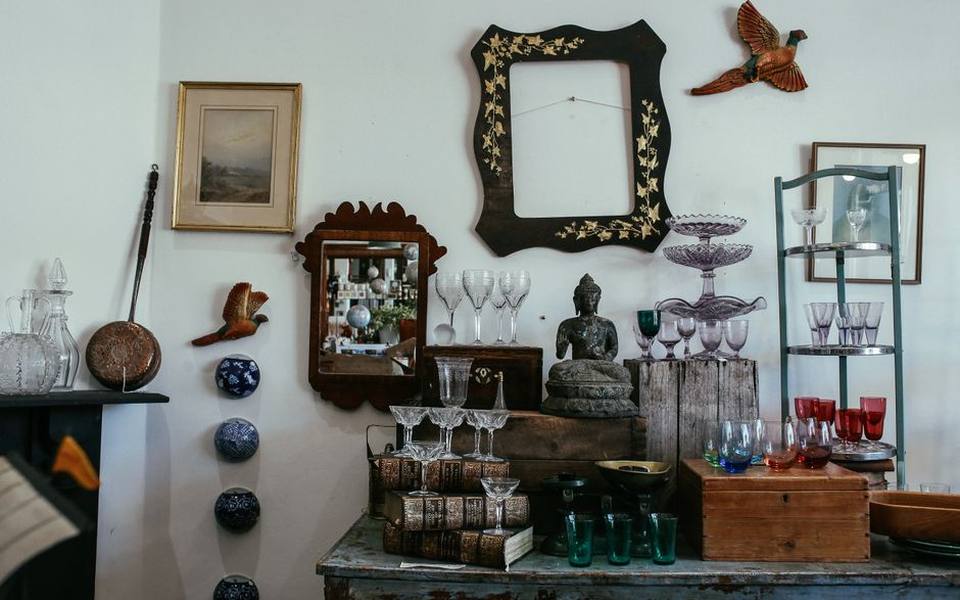
Authentic desilvering occurs where environmental moisture and oxygen settle over generations, which is why real deterioration almost always clusters around the perimeter of the frame or along the bottom edge where condensation gathered. The transition from clear reflection to cloudy oxidation is feathered and organic, often displaying faint halos of amber, charcoal, and shimmering gray. In contrast, modern faux finishes frequently feature dark spots evenly distributed across the prime center of the glass, an unnatural placement that rarely happens when a mirror hangs untouched in a dry home.
Running your fingernail or a soft cloth over the front surface also offers critical diagnostic clues. Genuine desilvering happens on the reverse side of the glass plate beneath the protective varnish, leaving the exterior glass smooth, cold, and intact. If you feel texture, pitting, or etched depressions on the face of the glass, the piece has likely been chemically distressed from the front or treated with modern surface transfers to mimic antiquity.
The Enduring Appeal of Ornate Gold Gilt Frames
Few decorative elements command attention quite like a vintage gold mirror finished in authentic leaf. Historically, European and American craftsmen built ornate gilded frames using carved timber coated with gesso—a smooth mixture of chalk and animal glue—before laying micro-thin sheets of gold leaf over a tinted clay base called bole. Red or yellow bole was chosen deliberately to add warmth beneath the gold, and over decades of cleaning, this underlying reddish clay often peeks through worn high-relief edges in a natural phenomenon collectors call rubbing.
Evaluating an antique gold mirror requires checking whether the finish is water gilding, oil gilding, or twentieth-century metallic paint. Water-gilded frames allow the craftsman to burnish the gold to a mirror-like shine using an agate stone, creating dramatic contrast between brilliant highlights and matte recessed carvings. If a frame has been refinished with radiator paint or modern gold spray enamel, the details will appear flat, opaque, and muddy, masking the sharp crispness of the underlying gesso carvings.
Composition ornament, often called compo, became the standard for elaborate Victorian frames in the late nineteenth century. Instead of hand-carving every leaf and scroll, makers pressed a dense dough of resin, linseed oil, and chalk into molds, adhering the casts to a plain wooden frame core before gilding. While compo allowed for incredible Rococo and Baroque flourishes, it is brittle; hairline age cracks along stress points and small perimeter chips are typical hallmarks of authentic nineteenth-century construction.
Evaluating Hardwood and Carved Wood Frames
For collectors drawn to earthy, understated elegance, a vintage wood frame mirror provides timeless warmth without the delicate maintenance required by fragile gilding. Throughout the eighteenth and nineteenth centuries, American cabinetmakers utilized indigenous and imported hardwoods such as black walnut, mahogany, quartersawn white oak, and cherry to house reflective glass. You can frequently discover remarkable examples of these hand-planed timbers while browsing through specialized Antique Furniture Stores, where mirrors often match the cabinetry traditions of their specific era.
Identifying the construction methods of a vintage wood framed mirror helps narrow down its production decade. Early nineteenth-century Federal and Empire frames showcase hand-sawn miter joints reinforced with wooden splines, while later Victorian Eastlake mirrors display machine-incised geometric grooves and mortise-and-tenon corner joints. Check the wood grain on carved flourishes: authentic period pieces feature distinct gouge marks from hand chisels, whereas twentieth-century reproductions tend to display smooth, uniform routing lines created by modern automated spindle carvers.
The finish on antique timber frames should reveal honest wear around the handling points. Dark shellac finishes oxidize into deep ambers and develop fine alligatoring—a network of microscopic surface checks caused by seasonal expansion and contraction. Avoid pieces that have been heavily chemically stripped and coated in modern polyurethane, as this process removes the historical skin of the wood and dramatically flattens the soft glow that only decades of paste wax and ambient light can cultivate.
Distinctive Silhouettes: The Vintage Octagonal Profile
Geometric silhouettes achieved widespread popularity across several distinct design movements, making an antique octagon mirror an intriguing study in evolving decorative tastes. During the late eighteenth and early nineteenth centuries, small octagonal looking glasses were crafted with wide, flat mahogany or walnut moldings, occasionally accented by inner gilt slips. Later, during the 1920s and 1930s, the Art Deco movement embraced the eight-sided form with bold, stepped bevels and streamlined framing that complemented the era’s fascination with machine-age geometry.
If you encounter a vintage octagon mirror from the Art Deco period, inspect the beveling along the edge of the glass plate. Authentic period mirrors typically feature broad bevels—sometimes an inch or more wide—that were ground and polished by hand on heavy cast-iron wheels. These manual bevels have a slight, pleasant irregularity in depth that you can feel by gliding your thumb along the perimeter, whereas contemporary computer-cut glass exhibits completely uniform, laser-straight edges that feel comparatively sterile.
Mid-century iterations of the octagonal form often incorporated narrow brass bands, woven split cane, or simulated bamboo turned from birch and maple. When evaluating these later twentieth-century examples, look for clean joinery at all eight corners. Because an octagon requires precise forty-five-degree cuts, poorly built reproductions will often exhibit separating seams, mismatched grain alignments, or visible modern synthetic glues oozing from the structural points.
Inspecting the Back: Fasteners, Backing Boards, and Clues
The rear of a wall mirror tells a much more honest story than the decorative front, making it the most critical area to inspect before making a purchase. Authentic antique mirrors were usually enclosed with thin pine, cedar, or poplar backing slats to protect the delicate silvering from abrasion and airborne dust. In eighteenth- and early nineteenth-century pieces, these boards were roughly split or cut with hand pit-saws, leaving irregular diagonal tool marks, and secured into the frame rabbet with hand-forged rosehead or cut iron nails.
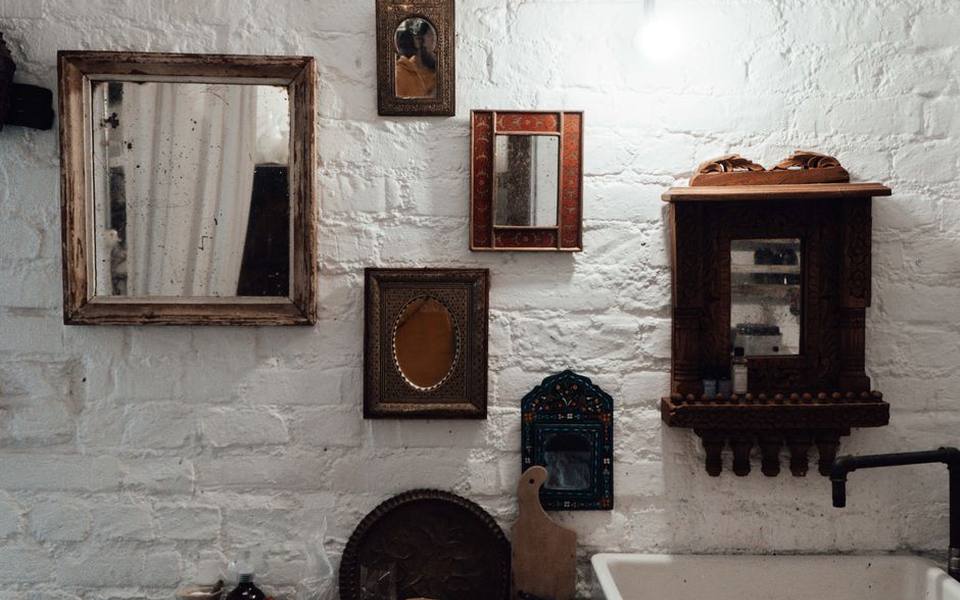
By the late Victorian era, backing boards were commonly cut with circular saws, leaving faint curved kerf marks across the timber. If you turn an allegedly eighteenth-century frame around and discover smooth plywood, particle board, or contemporary staples holding the glass in place, you are examining either an outright reproduction or a piece that has undergone substantial reconstruction. While replacement backing does not completely invalidate the antique value of a stunning frame, it requires verifying whether the glass itself is original.
Take time to read the paper remnants that occasionally linger on historical backing boards. Victorian and Edwardian manufacturers frequently affixed printed paper dust covers bearing lithographed maker labels, retail stamps, or patent dates. Even fragments of yellowed newsprint used as makeshift shims can provide a reliable terminus post quem for the assembly, offering fascinating clues regarding the mirror's regional history and provenance.
Where to Find Authentic Mirrors and What Determines Cost
Finding high-quality vintage mirrors for sale requires knowing where genuine historic inventory circulates rather than relying solely on mainstream home decor boutiques. A dependable place to begin your search is across regional Antique Malls, where multiple independent vendors curate specialized booths featuring decorative wall pieces from varying design eras. Because inventory turns over consistently, these collective venues offer excellent opportunities to compare different glass qualities and frame conditions side by side.
Another fruitful avenue for discovering untouched historical glass is attending local property liquidations. Browsing announcements from Antique Shops Offering Estate Sales allows you to view architectural mirrors still hanging in their original historic residential settings, often accompanied by family provenance. Similarly, checking inventory at regional Antique Consignment Shops frequently reveals private collections being downsized, where ornate gilt and hardwood mirrors can be purchased at competitive prices.
Pricing for old mirrors for sale fluctuates based on condition, frame rarity, and glass originality. A standard early twentieth-century wooden wall mirror typically sells within an approachable entry-level range, whereas an eighteenth-century carved giltwood looking glass with original mercury backing can command thousands of dollars. Heavy re-silvering, broken compo molding, replaced glass, or extensive modern paint touch-ups will significantly reduce market value, providing strong leverage for price negotiation.
Safe Hanging, Weight Considerations, and Wall Anchoring
Historic mirrors are remarkably heavy, combining dense solid-hardwood frames, thick plaster or composition ornamentation, and antique plate glass that is noticeably heavier than modern window panes. Suspending a forty- or sixty-pound piece requires proper hardware anchored directly into wall framing rather than relying on hollow drywall anchors. Never trust the rusty, brittle hanging wire installed several decades ago; old iron picture wire corrodes from the inside out and can snap unexpectedly under static tension.
To hang a heavy mirror safely, remove antiquated wire and install heavy-duty steel D-rings directly onto the left and right structural rails of the wooden frame. Fasten each D-ring using screws that penetrate deeply into the solid timber without puncturing through the front decorative molding. Hang the mirror from two separate wall fasteners secured into wooden wall studs, distributing the total mass evenly across two load-bearing points rather than suspending the entire weight from a single central hook.
Check the stability of the mirror glass inside the frame before hoisting it onto the wall. Over decades, wooden retaining blocks can dry out, loosen, or fall away entirely, allowing the glass to shift inside the perimeter rabbet. If the glass moves or rattles when gently nudged, reinforce the perimeter backing with small wooden shims or non-acidic archival board to prevent the plate from slipping out of its casing when tilted forward.
Living with Aged Glass and Caring for Gilded Finishes
Preserving an authentic antique mirror requires gentle, dry cleaning practices that protect both the delicate silvering and fragile frame moldings. Never spray ammonia-based commercial glass cleaners directly onto historic glass. Liquid cleaner readily drips down the pane, pools behind the bottom frame edge, and seeps into the backing via capillary action, rapidly dissolving the antique silvering and creating irreparable black rot along the bottom margin.
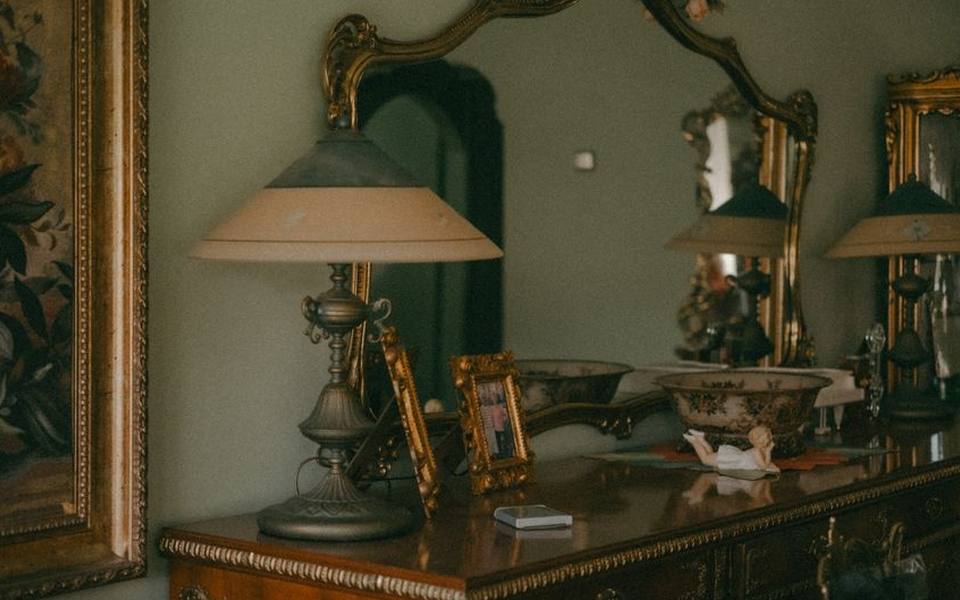
Instead, mist distilled water or a dedicated conservation-grade cleaner lightly onto a clean microfiber cloth until barely damp, then wipe the glass face gently, working strictly inward from the perimeter to prevent moisture from touching the wooden frame. For ornate gilt frames, avoid all liquid solutions entirely. The moisture in damp cloths can soften historic animal-glue gesso, lifting gold leaf clean off the plaster core; clean intricate carved compo using only a dry, soft-bristled artist's badger-hair brush.
Environmental placement inside the home is equally critical for long-term preservation. Antique mirrors should never be mounted in damp environments such as bathrooms with working showers or unconditioned sunrooms subject to extreme thermal swings. High humidity accelerates desilvering, while drastic humidity cycles cause antique wooden framing to warp, cracking delicate hand-carved joints and shattering irreplaceable historic glass.
When to Seek a Professional Valuation Before Buying
While casual enthusiasts can easily spot obvious reproductions, valuable seventeenth- and eighteenth-century mirrors often warrant formal verification before substantial sums exchange hands. If you are considering investing in a purported Chippendale, Queen Anne, or early American Federal pier mirror, consulting licensed Appraisal Services provides objective confirmation regarding period authenticity, wood identification, and structural originality.
Professional appraisers possess specialized tools, including ultraviolet inspection lights that instantly reveal modern repairs, hidden gesso patches, and non-period re-gilding that remain invisible to the naked eye under regular room lighting. Under UV illumination, original aged shellac glows an unmistakable orange-amber, while modern synthetic glues and acrylic touch-up paints fluoresce bright purplish-white or dull black, instantly exposing unrecorded restorations.
An appraisal document also establishes a verifiable baseline for insurance scheduling and estate planning. Because high-end decorative arts fluctuate based on regional auction trends and provenance, having a detailed condition report prepared by an accredited professional ensures you pay a realistic fair market price and protects your investment should the piece ever suffer accidental domestic damage.
Published 2026-09-21 · reviewed with each rebuild, last September 2026.
Find antique stores near you
The directory lists 25,996 antique stores by state and city — pick your state or use the “Near me” button in the header.
More guides
-
 Owning
Cleaning and Polishing Antique Silver Without Damaging the Patina
-
 Money
MoneyNavigating the Market for Vintage Currency
-
 Owning
Evaluating, Using, and Displaying Mid-Century Glassware and Kitchen Antiques
-
 Buying
Navigating Vintage and Antique Jewelry Styles
-
 Owning
How to Clean and Care for Silverware Without Causing Damage
-
 Owning
Vintage Pyrex Value and Safety Guide: Understanding Collector Patterns and Usage
-
 Buying
A Guide to Sourcing Vintage and Estate Jewelry
-
 Money
MoneyValuable Baseball Cards Guide: Spotting Vintage Sports Collectibles
-
 Owning
How to Clean and Restore Antique Wood Furniture
-
 Money
MoneyHow to Find and Use Antique Price Guides Online
-
 Money
MoneyHow to Determine the Value of Old Books and First Editions
-
 Money
MoneyWhere and How to Sell Vintage Coins for the Best Return
-
 Buying
Choosing and Caring for Vintage and Modern Cast Iron Cookware
-
 Owning
How to Polish and Value Antique Silverware at Home
-
 Owning
How to Clean and Polish Antique Wood Furniture Without Damaging It
-
 Buying
Vintage and Classic Cast Iron Cookware: Buyer's, Value, and Care Guide
-
 Buying
Antique Silverware, Vintage Jewelry, and Collectible Coins Guide
-
 Money
MoneyA Practical Guide to Antique Price Guides and Rare Book Valuations
-
 Owning
How to Clean, Polish, and Refinish Antique Wood Furniture
-
 Owning
Ultimate Guide to Vintage and Antique Cast Iron Cookware: Brands, Seasoning, and Care
-
 Owning
How to Clean, Polish, and Value Vintage Silverware and Antique Jewelry
-
 Buying
Valuing Vintage Collectibles: From Rare Dolls and Slot Machines to Classic Lamps and Churns
-
 Owning
How to Clean, Polish, and Refinish Antique Wood Furniture
-
 Money
MoneyVintage Glassware Value Guide: Pyrex, Depression Glass, CorningWare, and Bottles
-
 Money
MoneyAntique & Vintage Price Guides: How to Value Antiques and Collectibles
-
 Buying
How to Value Old Books and First Editions: A Collector's Price Guide
-
 Money
MoneyWhere and How to Sell Vintage Records and Audio Equipment
-
 Buying
How to Buy, Value, and Sell Vintage Coins: A Practical Beginner's Guide
-
 Buying
Estate Sale Guide: How to Find, Buy, and Liquidate Antiques
-
 Buying
Vintage and Modern Cast Iron Cookware: Identification, Seasoning, Buying, and Care
-
 Money
MoneyComprehensive Guide to Antique Values, Old Books, and Collectibles Pricing
-
 Owning
Cleaning and Caring for Vintage Silverware, Fine Jewelry, and Antique Metals
-
 Owning
How to Clean, Polish, and Refinish Antique Wood Furniture
-
 Buying
Vintage and Modern Cast Iron Cookware: Identification, Caring, and Buying Guide
-
 Owning
Antique Silverware: Cleaning, Polishing at Home, and Value Guide
-
 Owning
Care, Polishing, and Refinishing Guide for Antique Wood Furniture
-
 Buying
Vintage Pyrex, Glassware, and Depression Glass Identification and Value Guide
-
 Money
MoneyAntique Price Guides: How to Value and Sell Antiques Online and Offline
-
 Money
MoneyCollectible Old Books and First Editions: Valuation and Identification Guide
-
 Buying
Vintage Sewing Machines, Stoves, and Antique Tools Value Guide
-
 Buying
Collector Guide to Vintage Door Hardware, Knobs, and Cabinet Pulls
-
 Owning
Antique & Vintage Dolls: Values, Identification, and Care
-
 Buying
Antique Hoosier Cupboards and Vintage Desks: History, Identification, and Value
-
 Service
Grandfather, Wall, and Pocket Clock Repair and Identification Guide
-
 Owning
Antique Rotary Telephones and Landlines: Buying, Restoring, and Converting
-
 Owning
Collecting Vintage Picture Frames and Oil Paintings: Framing and Restoration
-
 Buying
Antique Sewing Machines and Spinning Wheels: Value, Brands, and Maintenance
-
 Buying
Antique Wood Stoves and Log Burners: Buying, Safety, and Restoration Guide
-
 Buying
Depression Glass and Antique Canning Jars: Identification and Values
-
 Owning
Antique Silverware and Silverplate Flatware: Cleaning, Identification, and Value
-
 Buying
Vintage Engagement Rings and Art Deco Jewelry: Buying and Valuation
-
 Buying
Buyer Guide to Vintage and Antique Furniture: Seating, Tables, Desks, and Reproductions
-
 Buying
Collector Guide to Vintage Toys, Lighters, Sports Ephemera, and Curios
-
 Buying
Architectural Salvage Guide: Sourcing Stained Glass, Mantels, and Historic Hardware
-
 Buying
Vintage Fashion and Heirloom Style: Sourcing Dresses, Denim, Leather, and Ephemera